Ideas for sale
Why maintain a "marketplace" of ideas when you could have a playground? Or perhaps a community garden?

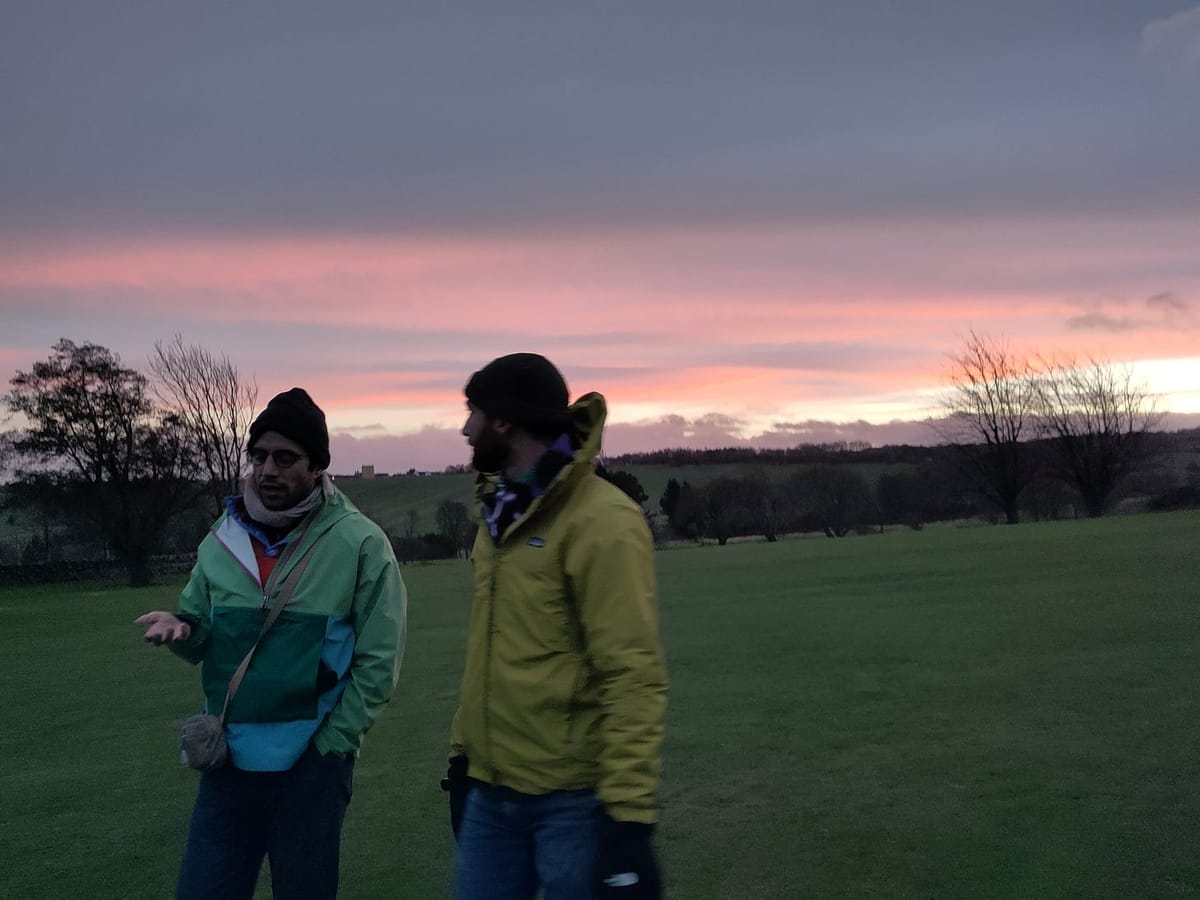
In our very first post, I promised that every once in a while we’d step back from the complexities and horrors of the moment to pause, take a breath, and feel the metaphoric undercurrents of our interactions with the world. We’ve now subjected you, dear readers, to analyses of corporate violence, sexism in science, and the creep of religious metaphors into our laws. So, I think now is a good time to take a break. The political will be there, as it always is. But we’re going deep, past your doomfeed, to think about a metaphor operating quietly and powerfully beneath our daily casual interactions.
Ideas are objects. Not the kind of objects made of atoms[1], sure, but still the kind of objects that we see, grasp, hide, and lose. At least, that’s how we talk about them. When I understand you, I “see” what you mean. When I am keeping a secret, you might ask me what I’m “hiding” or accuse me of a “cover up”. We describe important ideas as “big”. We describe our thoughts on a bad day as “messy”. Ideas are objects with all kinds of object-y properties. In an introductory book or course on metaphor, this is one of the first (if not the first) you’ll encounter.[2]
When we communicate, we do things with these mental objects, externalizing them through expression. We bring our thoughts into the world as words, signs, and images, packed and transformed into communicative objects. When we talk about these communicative objects, i.e. when we talk about talk, we often do so in economic terms, framing communication as a transaction. Through talk, we “exchange” ideas. Our social world becomes a “marketplace” in which individuals coerce each other into buying ideas through conversation and debate.[3]
But it doesn’t need to be that way. We can talk about talk, communication, and interaction more generally in non-transactional terms. We can tell a different story of ideas, one of collaborative meaning-making through joint activity and cooperation. And I think doing so could actually be quite radical.
The “Conduit Metaphor” is by far the most discussed metaphor for communication — messages (be it in the form of a conversation, poem, or blog post) are packed with ideas and then sent to a receiver to be unpacked and inspected (i.e. interpreted). The inaccuracies and potential social harms of this metaphor have been discussed since Reddy (1979) gave it a name.[4] If I send you a package, I no longer possess its contents, but I certainly don’t forget an idea upon communicating it. The recipient of a package unpacks the very same contents that a sender packs in, but words don’t always evoke the same ideas and experiences in different individuals. There is a kind of unresolvable asymmetry between the sender of a package and the receiver, in the agency granted to each, but communication is (one hopes) symmetric and reciprocal.
Freire (1970) saw the dangers even earlier in his reflections on the traditional “banking model” of teaching[5], alluding to the economic logic that underlies the framing of communication as a transfer of knowledge. Once again, the recipient (i.e. learner) is stripped of their agency, dutifully accepting the contents of the package as the sender (i.e. teacher) intended. In Freire’s argument though, this process is even more troublesome, as it is not just the agency that is asymmetrical, but also the power. And in accepting the asymmetric transfer of knowledge, we reinforce the power structures that support the transfer, further entrenching an expectation of some people as agents and some as passive recipients.
What then are the alternatives? Freire suggests “problem-posing”.[6] Rather than transferring knowledge — a concept is positioned for mutual inspection. Freire was writing about education, but his concerns and proposals are applicable to our understanding of interaction more generally, and of how power asymmetries can be challenged or reinforced by the ways we conceive of those interactions.
In my own work, I look at how we move our hands when we talk.[7] And our hands don’t tell the same economic myths that our words do. Our hands tell a story much more like the one suggested by Freire. As we introduce topics, we move our hands as if to present an object into a shared space where we can inspect its features together.
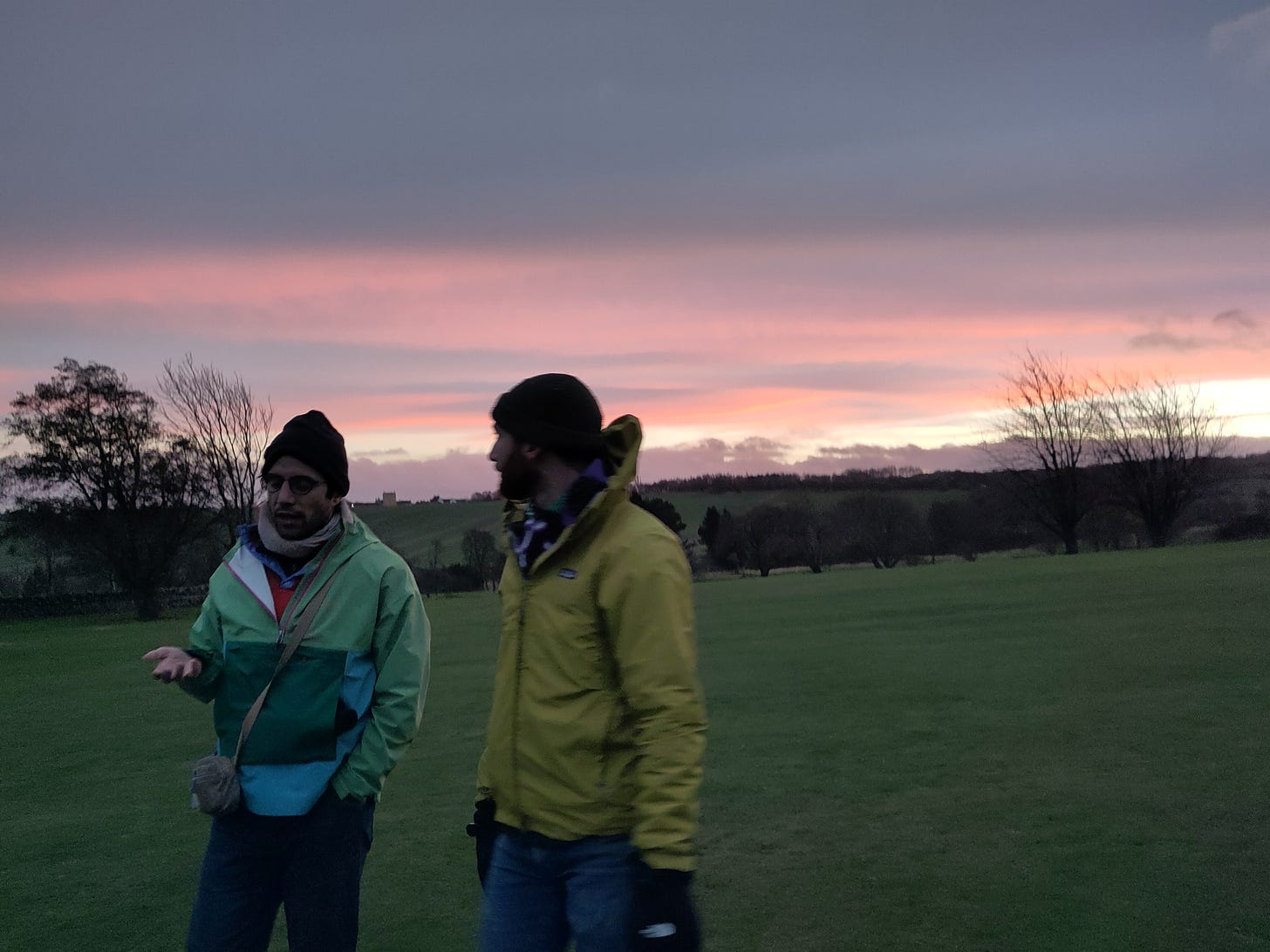
We point to the “objects” placed or held by another, drawing joint attention to a particular point. We position more “objects”, small ones held between tightly bunched fingers when we’re making a really important argument, big ones when we are introducing something complex. We swat ideas away or clear our shared space with a big sweep of the arm when the ideas we’ve placed are no longer wanted or relevant.
Our words tell all kinds of convoluted and twisted stories about the metaphors that shape the metaphors that shape our complex social world. But our hands show us metaphors more basic, more grounded in our interaction with the physical world. They remind us that communication is about co-presence, whether real or imagined[8], and that making sense of the world is physical, ongoing, and collaborative.
There are likely many avenues by which transactional notions sneak into our talk about talk. But I think our “written language bias” is an important one.[9] When we think of communication, we tend to value written communication very highly. It is the proper stuff, the standardized stuff, the stuff of the well-educated and articulate. But written communication is also really weird.[10] So long as we interact with one another, most of us “pick up” complex systems of communication like speech and sign without much directed effort. But we all have to be taught how to write. Writing is much less interactive and collaborative than speech or sign, creating an asymmetry of “writer” and “reader” that parallels the sender and receiver of our transactional metaphor. Writing is also a form of communication that can be literally sent.
In our hyper-digital world, we may find ourselves writing more than speaking (or signing). But even if we spend more hours in front of a screen than looking at each other, we are still physical bodies in a physical world. And when we engage those full bodies, we get a form of communication that is much less transactional and much more collaborative. Communication, like joint physical activities, is rarely about exchange. Or, rather, it doesn’t have to be. It can be about building, creating, and playing together.
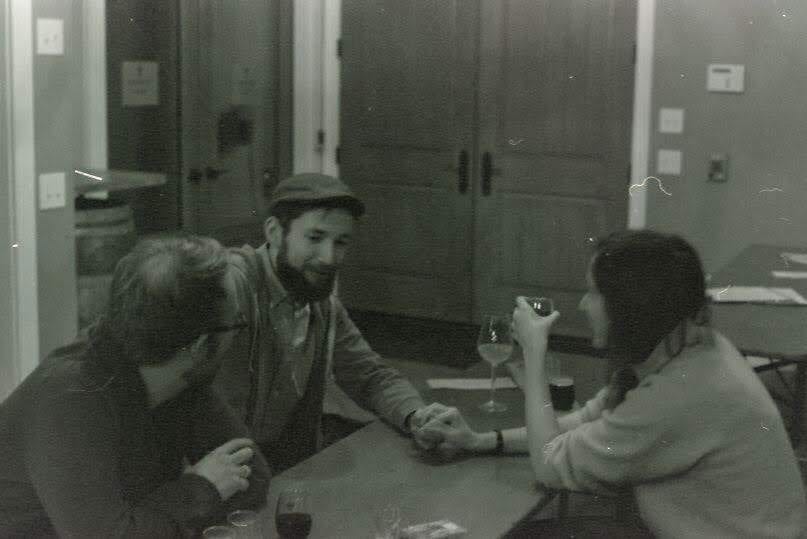
You don't have to buy what I'm saying, because I'm not trying to sell you on anything. I'm just over here, putting together some pieces I've found for making a more compassionate understanding of how we talk to one another. And I'd like your help. What's that you're carrying? Maybe it could help to stabilize the foundations.
The week in metaphor
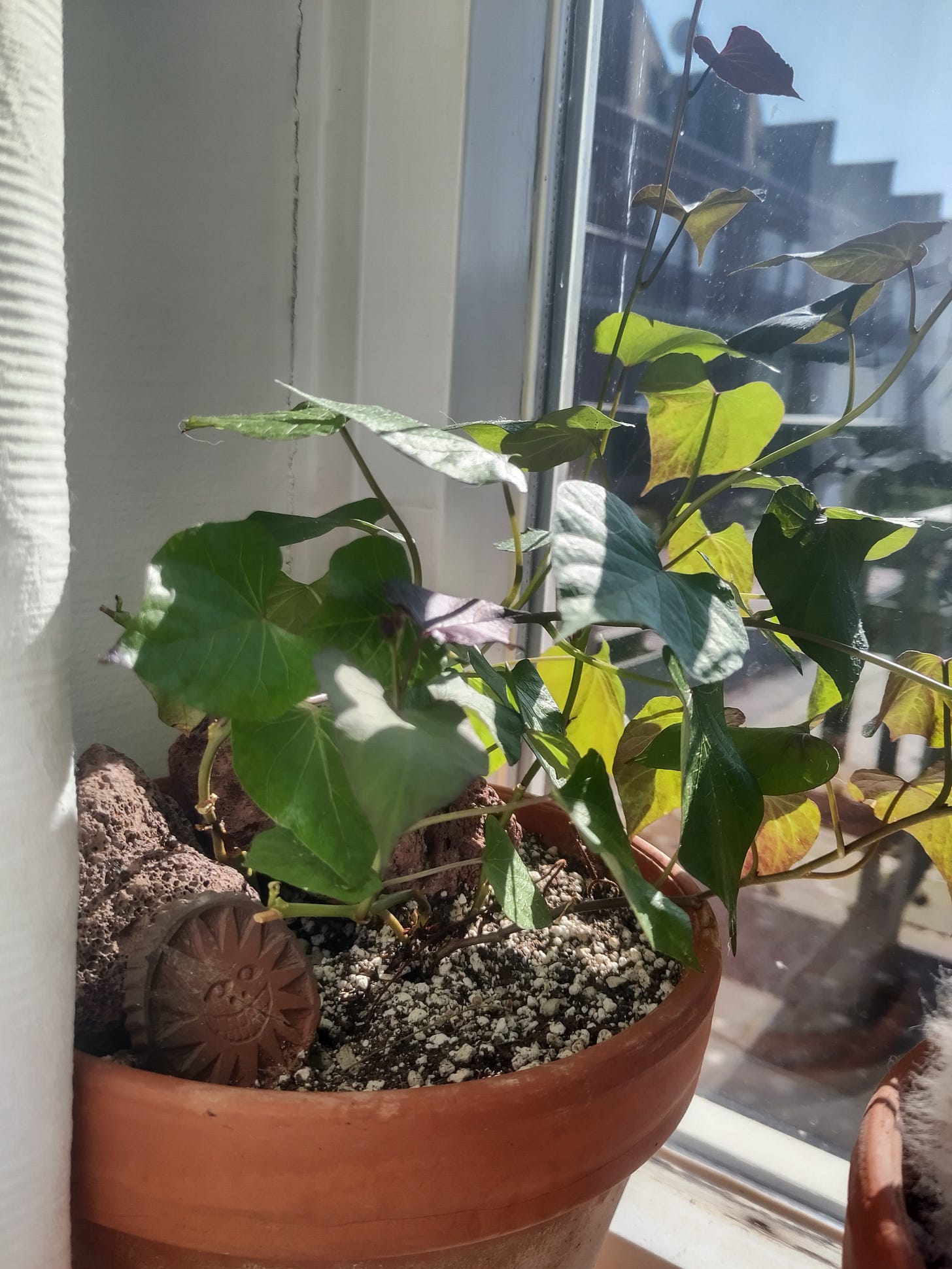
- And for a wee bit of cultivated hope: our sweet potato vine. A forgotten sweet potato, shriveled and moldy, now eagerly and beautifully reaching toward the sun. What else would thrive with just a bit of (metaphoric) soil and light?
Shout out to Andrew Murphie for introducing me to this gorgeous Gregory Bateson metaphor:
There is an ecology of bad ideas, just as there is an ecology of weeds.
I should note that I’m wary of the rhetoric of “weeds”. Assigning value to living things based on how useful or annoying they are to us[11] is not a great look given all the ecological crises we’ve gotten ourselves into. But perhaps that makes the metaphor even more apt and interesting.
Follow-up on a M*sk metaphor from a couple of weeks ago. To undo all of the deleting of our democratic institutions, we’ll need a lot of control-z (thank you Josh Klemons 💪💙💪for this quip).
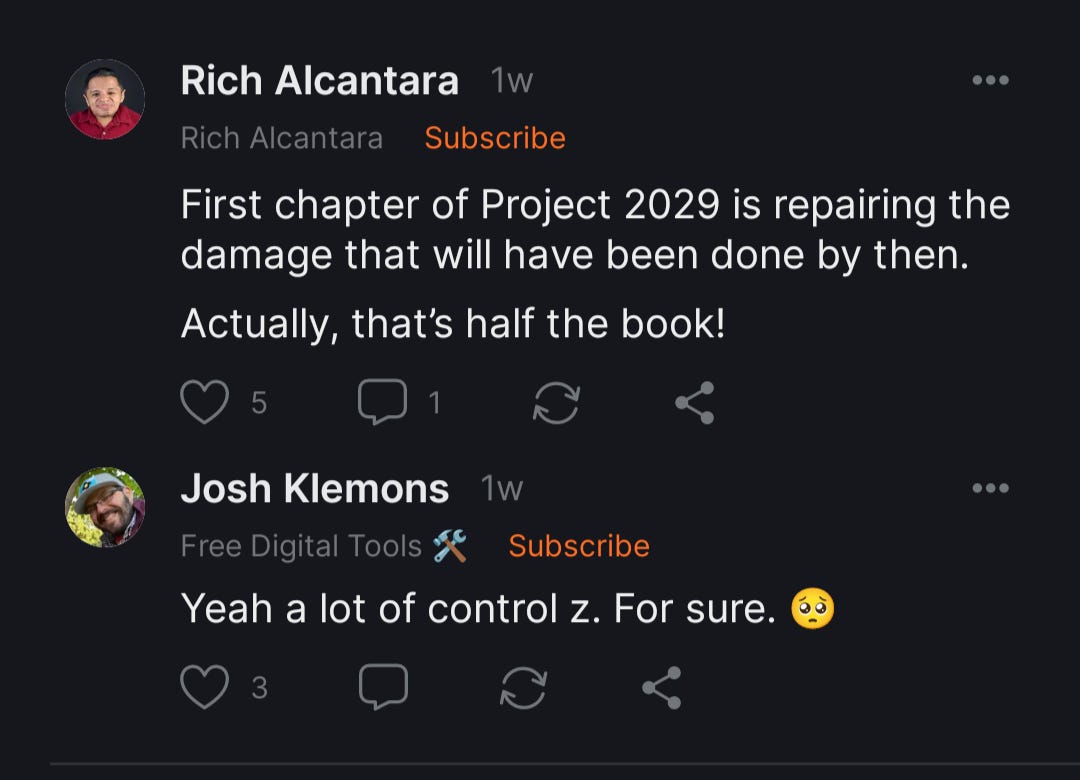
I almost wrote a full blog post on this computerization of politics, actually. But then I decided to reclaim some of my brain time from M*sk instead.
That’s all for now folks. Kelly will be back next time to continue her deep dive into our shifting metaphors for abortion.
In the meantime, may the metaphors be with you.
-Schuyler
If you really enjoyed this piece, please consider leaving us a tip. We don't believe in paywalls and are as sick of paid subscriptions as you are. So we don't even offer them. But it does cost money to keep this thing going and anything you have to spare helps ❤️
[1] That’s a Philomena Cunk joke. Thank you, Tee, for the almost-unbearably-awkward giggles.
[2] Lakoff & Johnson’s Metaphors We Live By (1980) is the classic. Dancygier & Sweetser’s Figurative Language (2014) is one of my favorites.
[3] For a history of this absurdly influential legal metaphor see: Brazeal, G. (2011). How much does a belief cost: Revisiting the marketplace of ideas. S. Cal. Interdisc. LJ, 21, 1.
And for an early and searing critique: Ingber, S. (1984). The marketplace of ideas: a legitimizing myth. Duke Lj, 1.
[4] Reddy, M. J. (1979). The conduit metaphor: A case of frame conflict in our language about language. Metaphor and thought, 2, 164-201.
[5] Freire, P. (1970). Pedagogy of the oppressed. New York: Continuum.
[6] Reddy suggests some kind of “toolmakers paradigm” that I honestly don’t really understand — something about cyclic discovery through imperfect exchange. Potentially cool, still stuck in a writing-centric notion of communication though.
[7] I wrote a dissertation that is too long. But the first couple of chapters are alright, I think: Laparle, S. (2022). The shape of discourse: How gesture structures conversation. University of California, Berkeley.
[8] Speakers move there hands even when their listener can’t actually see them or their gestures (e.g. when they’re on the phone). Isn’t that fun?
[9] Linell, P. (2005). The written language bias in linguistics: Its nature, origins and transformations. Routledge.
[10] Pun unintentional, but welcome. Writing is weird, but also pretty W.E.I.R.D.
[11] Here’s a basic review of “weed” as a hopelessly contested concept: Holzner, W. (1982). Concepts, categories and characteristics of weeds. In Biology and ecology of weeds (pp. 3-20). Dordrecht: Springer Netherlands.
And a more fun and spicy discussion of plant agencies and the “performance” of weeds by gardeners: Doody, B. J., Perkins, H. C., Sullivan, J. J., Meurk, C. D., & Stewart, G. H. (2014). Performing weeds: Gardening, plant agencies and urban plant conservation. Geoforum, 56, 124-136. http://dx.doi.org/10.1016/j.geoforum.2014.07.001